
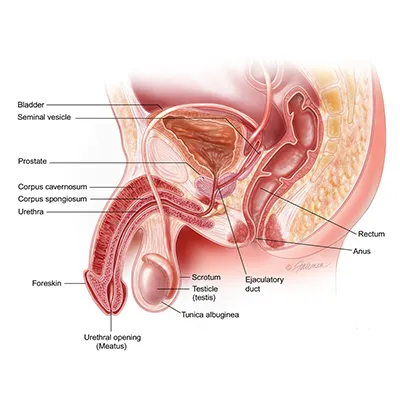
What is premature
ejaculation?
Premature ejaculation (PE) is defined clinically as ejaculation that consistently occurs sooner than a man or his partner would like — often within a minute of penetration — and causes distress or interpersonal difficulty. The definition includes three elements: a short time to ejaculation, lack of control over when it happens, and negative personal or relationship consequences. All three matter. Brief intercourse without distress isn't a medical problem; distress without truly short latency isn't PE either.
The International Society for Sexual Medicine defines PE more specifically: ejaculation within approximately one minute of vaginal penetration (for lifelong PE) or a clinically significant reduction in latency time (for acquired PE), combined with the inability to delay ejaculation on all or nearly all penetrations, and negative personal consequences.
PE is extraordinarily common. Around 30% of men report experiencing it at some point, and around 5% have persistent significant PE. Despite being one of the most prevalent men's health conditions, it is also one of the most under-treated — because the conversation rarely starts. Men assume it's a personal failing rather than a medical condition, or they don't realise effective treatments exist.
Two patterns,
different treatment paths.
Lifelong (Primary) PE
Present since the first sexual encounters. The man has never had what would be considered normal ejaculatory latency. Often has a neurobiological component — believed to involve serotonin receptor sensitivity. Strongly responsive to oral medications.
Acquired (Secondary) PE
Develops after a period of normal sexual function. Often linked to a specific trigger — erectile dysfunction, prostatitis, hormonal changes, relationship stress, or a new partner. Treatment focuses on addressing the underlying cause.
Variable PE
Inconsistent — some encounters fine, others premature. May reflect normal variation, situational anxiety, or be the early stage of developing PE. Treatment less standardised.
Subjective PE
The man perceives his latency as too short, but objective measurement shows normal or near-normal times. The distress is real even when the latency isn't medically short. Approach focuses on perception and expectations, sometimes with counselling.
What contributes
to PE.
Lifelong PE is largely driven by neurobiological factors — particularly the way serotonin signalling regulates ejaculation. Some men have genetically determined hypersensitive ejaculatory reflexes. This explains why SSRIs (which modulate serotonin) are so effective for this pattern.
Acquired PE has identifiable triggers that are often treatable:
- Erectile dysfunction — many men with developing ED rush to ejaculate before losing the erection. Treating the underlying ED often resolves the PE.
- Prostatitis — chronic prostate inflammation can alter ejaculatory control. Treatment of the prostatitis often improves PE.
- Hyperthyroidism — overactive thyroid is a recognised cause of acquired PE. Screening with TSH is standard.
- Relationship factors — new partner, performance anxiety, communication issues, infrequent sexual activity.
- Psychological factors — anxiety, depression, history of sexual trauma, conditioned rapid response from early sexual experiences (rushed encounters during adolescence).
- Substance use — withdrawal from opioids, certain recreational drugs, or even prescription medications can affect ejaculatory latency.
- Hormonal changes — sometimes related to testosterone or prolactin abnormalities.
- Neurological conditions — uncommon, but conditions affecting the autonomic nervous system can alter ejaculation.
Most men with PE have a combination of contributing factors. The clinical work is identifying which ones are modifiable in your specific situation.
A conversation,
not a test.
Unlike most medical conditions, PE is primarily a clinical diagnosis. There is no blood test, scan, or device that "confirms" PE. The evaluation is built around the history.
Standard evaluation:
- Detailed history — onset (lifelong or acquired), latency time (estimated or measured), control over ejaculation, partner's perspective if relevant, impact on the relationship and confidence, any triggers or patterns
- Sexual history — frequency of intercourse, masturbation patterns, partner factors, any current relationship distress
- Medical history — ED, prostatitis, thyroid issues, diabetes, neurological conditions, depression, anxiety
- Medication history — including over-the-counter products and any "men's health" supplements being used
- Physical examination — usually focused on prostate (digital rectal examination), genitalia, signs of hormonal abnormalities
- Selected blood tests — testosterone, prolactin, TSH, sometimes fasting glucose. Particularly relevant for acquired PE.
- Validated questionnaires — Premature Ejaculation Diagnostic Tool (PEDT) and Index of Premature Ejaculation (IPE) sometimes help quantify symptoms and track treatment response.
Most evaluations are completed in a single 30-minute consultation. Treatment can typically begin the same day or after limited blood work returns. This is not a workup that takes weeks of investigation.
The free interventions
that genuinely work.
Behavioural techniques are evidence-based, cost nothing, and form the foundation of PE treatment. Done correctly, they can be effective on their own for mild-to-moderate PE. For more severe PE, they remain useful as a complement to other treatments. The two main techniques:
Start-Stop Technique (Semans technique):
- During intercourse or masturbation, when approaching the point of ejaculation, stop all stimulation
- Wait 30 seconds to a minute until the urge to ejaculate subsides
- Resume stimulation
- Repeat several times before allowing ejaculation
- Over weeks of practice, the brain learns to tolerate higher arousal levels without triggering ejaculation
Squeeze Technique (Masters and Johnson):
- Same approach as start-stop, but at the point of approaching ejaculation, the man (or partner) firmly squeezes the area just below the glans for several seconds
- This reduces the urgency and allows continuation
- Repeat several times before allowing ejaculation
Pelvic floor exercises (Kegel exercises in men):
- Strengthen the muscles involved in ejaculation control
- Identify the right muscles by stopping urine mid-stream
- Practice 10 contractions of 5 seconds each, three times daily
- Evidence suggests meaningful improvement in some men over 12 weeks of consistent practice
On-demand treatments
applied before intercourse.
Topical anaesthetic agents reduce penile sensitivity, increasing latency to ejaculation. They are applied to the penis 20–30 minutes before intercourse and have minimal systemic effects. Available options:
- Lidocaine-prilocaine cream (EMLA) — applied to the glans, partially absorbed. Reduces sensitivity meaningfully. Disadvantage: can transfer to partner causing vaginal numbness. Mitigated by use of condom or wiping before intercourse.
- Lidocaine spray (Promescent or similar) — sprayed onto the penis, absorbed quickly. Less risk of transfer than cream. Onset 5–10 minutes.
- Benzocaine wipes — single-use wipes containing topical anaesthetic. Convenient but variable efficacy.
What to expect:
- Latency time typically increases 2–3 fold with consistent use
- Suitable for men who don't want daily medication
- Good for men with situational or mild-to-moderate PE
- Some loss of sensation is the trade-off — usually acceptable but worth discussing
Topical agents are often the first-line medical treatment for men preferring an on-demand option without daily medication. They work, they're safe, and they're widely available.
The evidence-based
pharmaceutical options.
Several oral medications are supported by clinical evidence for PE. The right choice depends on whether you prefer daily or on-demand dosing, whether you have coexistent conditions, and how your body responds.
Dapoxetine — the only PE-specific approved drug
A short-acting SSRI specifically developed and licensed for PE. Taken 1–3 hours before anticipated intercourse, not daily. Provides immediate-cycle improvement. Common side effects: nausea, dizziness, headache (usually mild and improve with continued use). Available in 30mg and 60mg doses. The most widely-used on-demand PE treatment globally.
Daily SSRIs (off-label use)
Paroxetine, sertraline, fluoxetine, citalopram — antidepressants that, as a side effect, delay ejaculation. Taken daily, not on-demand. Effect builds over 2–3 weeks. Most effective single class of drugs for lifelong PE. Side effects include reduced libido in some men, occasional erectile difficulties, possible weight changes. Worth trying when on-demand options aren't sufficient.
Clomipramine
A tricyclic antidepressant with strong evidence for PE treatment. Can be used daily or on-demand. Effective but slightly older drug class with more side effects than SSRIs.
PDE5 inhibitors (sildenafil, tadalafil)
When ED coexists with PE, treating the ED with PDE5 inhibitors often resolves the PE simultaneously. Particularly useful in acquired PE driven by performance anxiety or developing ED.
Tramadol (selective use)
Has anti-PE properties but with significant abuse potential. Reserved for selected refractory cases under close supervision. Not a first-line option.
The "men's health"
products that don't work.
PE is a heavily-marketed condition in India, and patients are often sold unverified or counterproductive products by aggressive "men's health" services and pharmacy counter recommendations. To be direct about what doesn't work or actively harms:
- Unverified herbal "stamina" supplements — most have no evidence of effectiveness. Some have been found to contain undisclosed active pharmaceutical ingredients (sometimes unsafe doses), heavy metals, or banned substances. They are not safer than pharmaceutical alternatives; they are less safe because contents are unverified.
- "Ayurvedic" PE products from non-credible sources — legitimate Ayurvedic medicine exists, but the products aggressively marketed for PE through online ads and small shops rarely come from credible sources and have no documented efficacy or safety.
- "Magic" creams, oils, or sprays of unknown composition — products sold without clear ingredient lists are not safe to apply to genital skin.
- Penile injections of unknown substances — only platelet-rich plasma in legitimate medical settings has any role here, and even that is experimental. Injections of other substances by non-specialists carry serious risks including infection, scarring, and tissue damage.
- "Shockwave therapy" for PE — has evidence for some erectile dysfunction indications but no established role for PE treatment.
- Aggressive multi-thousand-rupee "treatment packages" — legitimate PE treatment is rarely expensive. Standard SSRIs, dapoxetine, and topical agents are widely available pharmacy products. Any service trying to bill you tens of thousands of rupees upfront for a "premature ejaculation cure" is selling marketing, not medicine.
Evidence-based.
Honest pricing.
No exaggerated promises.
Confidential consultation
Private room, confidential records, discreet billing. The conversation stays between you and us — not with your family, partner (unless you choose), or insurance.
Real medicine, no marketing
SSRIs, dapoxetine, topical agents, behavioural techniques — the treatments with actual evidence. Not unverified "stamina" products or expensive "packages."
Underlying causes investigated
Acquired PE often has a treatable cause — ED, prostatitis, hyperthyroidism. We screen for these rather than just prescribing the same medication to everyone.
Couples conversation welcomed
PE affects the relationship as much as the individual. Partner can attend consultation if you wish. Often the right approach combines medical treatment with frank couple conversation.
Pricing for PE
treatment.
| Service | Starting from |
|---|---|
| Confidential consultation | ₹ [____] |
| Hormonal screen (testosterone, TSH, prolactin) | from ₹ [____] |
| Dapoxetine (on-demand, monthly supply) | from ₹ [____] |
| Daily SSRI (monthly supply) | from ₹ [____] |
| Topical anaesthetic agents (per pack) | from ₹ [____] |
| Combined PE + ED treatment (monthly) | from ₹ [____] |
| Follow-up consultation | from ₹ [____] |
Self-pay is straightforward and affordable.
PE treatment is generally not covered by Indian health insurance — but the medications are inexpensive when bought through standard pharmacies. Most patients prefer to pay privately for the consultation as well, both for confidentiality and to keep the diagnosis off workplace insurance records. We accommodate this.
Premature ejaculation —
your questions.
Studies of average intravaginal ejaculation latency time report a median of around 5–6 minutes, with substantial individual variation. PE is typically defined by ejaculation within approximately one minute combined with lack of control and distress. "Normal" varies widely — and the medical concern is not a specific number but the combination of short latency, lack of control, and personal distress.
Often yes — dapoxetine is taken 1–3 hours before anticipated intercourse and works in the same cycle. About 70% of men show meaningful improvement in their first treatment cycle. Daily SSRIs by contrast take 2–3 weeks of build-up before reaching full effect.
Depends on the type and cause. Lifelong PE often requires ongoing treatment because the underlying neurobiology doesn't change — though some men can switch to behavioural techniques once they've learned control with medications. Acquired PE often resolves when the underlying cause (ED, prostatitis) is treated.
Yes — SSRIs have an extensive safety record from decades of use for depression. The doses used for PE are often lower than for depression. Side effects can include reduced libido, occasional erectile difficulties, and possible weight changes. Most men tolerate them well; we monitor for side effects and can adjust.
Whatever you prefer. Some men come alone, others bring their partner. PE is a relationship issue as much as an individual one, and partner involvement can be helpful — but it's not required. The choice is yours.
No. Penile injections have a role for some severe erectile dysfunction cases, but not for PE. Any clinic recommending injections of unknown substances for PE should be avoided — this can cause serious complications including scarring and infection.
Most heavily-marketed herbal PE products have no evidence of efficacy, and some have been found to contain undisclosed pharmaceutical ingredients (sometimes in unsafe doses) or heavy metals. We don't recommend them. Evidence-based treatments are available, affordable, and safer.
No — this is a common myth. Masturbation does not cause PE. Lifelong PE has a neurobiological basis present from the beginning. Acquired PE has identifiable triggers (ED, prostatitis, hyperthyroidism, relationship factors). Masturbation patterns are not a cause.
Yes — absolutely. Private consultation, confidential records, discreet billing options. Family members, employers, and insurance companies are not informed without your written consent.
Generally no — Indian health insurance typically does not cover PE consultations or medications. The medications are affordable when bought through standard pharmacies. Many patients prefer paying privately for confidentiality reasons regardless of coverage.
