
What is
prostate cancer?
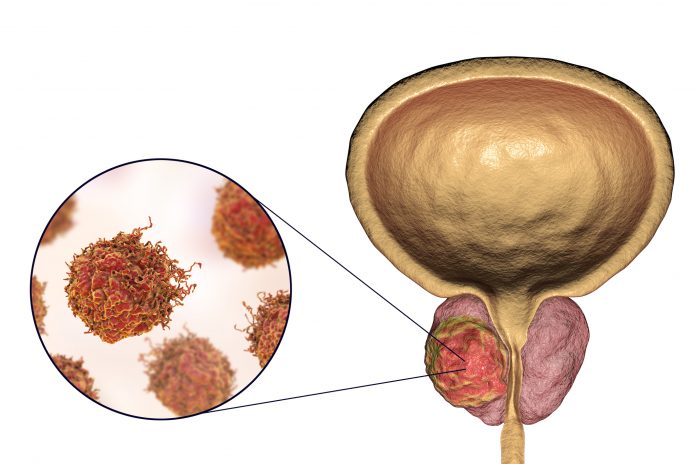
Prostate cancer develops in the prostate gland — the walnut-sized organ that sits below the bladder and surrounds the urethra in men. Most prostate cancers are slow-growing (adenocarcinomas), but some are aggressive. The difference between an aggressive and indolent prostate cancer matters more than almost any other factor in deciding treatment.
Many prostate cancers cause no symptoms in early stages and are detected through PSA screening or digital rectal examination. Symptomatic prostate cancer — bone pain, blood in urine, advanced obstruction — often indicates more advanced disease.
Prostate cancer
by risk category.
Risk is determined by PSA, Gleason score, and clinical stage.
Very Low & Low Risk
PSA < 10, Gleason 6, organ-confined. Active surveillance often appropriate. Treatment may be deferred.
Intermediate Risk
PSA 10–20, Gleason 7. Treatment recommended: radical prostatectomy or radiotherapy. Sometimes with hormonal therapy.
High Risk
PSA > 20, Gleason 8–10, locally advanced. Multi-modal treatment: surgery or radiation + hormonal therapy. Long-term follow-up.
Metastatic
Spread beyond prostate. Systemic therapy: hormonal therapy, chemotherapy, newer targeted agents. Surgery for symptom control where appropriate.
From PSA
to confirmed diagnosis.
Step 1 — PSA and DRE. A blood test (Prostate-Specific Antigen) and digital rectal examination form the screening foundation. Elevated PSA or abnormal DRE warrants further evaluation.
Step 2 — Multi-parametric MRI. The modern standard before biopsy. Identifies suspicious lesions and helps target biopsy more accurately.
Step 3 — Biopsy. Either systematic transrectal biopsy or — preferably — MRI-guided fusion biopsy of suspicious areas. Tissue is reviewed by uro-pathology for Gleason scoring.
Step 4 — Staging. For intermediate and high-risk disease, additional imaging: bone scan, CT, sometimes PSMA PET scan to detect spread.
Step 5 — Multi-disciplinary review. Discussion of biopsy, imaging, and patient preferences leads to a treatment recommendation.
Five paths,
matched to risk.
Active Surveillance
Regular PSA, periodic MRI and biopsy. Treatment only if cancer progresses. Avoids over-treatment of indolent cancers in older men.
Radical Prostatectomy
Removal of entire prostate. Open, laparoscopic, or robotic-assisted. Nerve-sparing technique can preserve erectile function in selected cases. Done at partner centres with robotic infrastructure where indicated.
External Beam Radiotherapy
Either alone or combined with hormonal therapy. Referred to partnered radiation oncology. Some patients prefer this over surgery.
Brachytherapy
Radioactive seeds placed into the prostate. For selected low to intermediate risk cancers. Done at partnered centres.
Hormonal Therapy & Chemotherapy
For advanced or metastatic disease. Newer agents (abiraterone, enzalutamide) have dramatically improved outcomes. Coordinated with medical oncology.
Considered care
for a high-stakes
diagnosis.
No pressure to operate
Active surveillance is a legitimate option for many low-risk cancers. We discuss honestly.
Multi-disciplinary coordination
When radiation, hormonal therapy, or chemotherapy is part of the plan, we coordinate with partnered oncology centres.
Function preservation
Where surgery is the right choice, nerve-sparing technique is used wherever oncologically safe.
Second opinions welcome
Bring outside reports, biopsies, and imaging. Honest assessment, no pressure to switch.
Prostate cancer pricing — diagnosis to treatment.
| Procedure | Starting from |
|---|---|
| PSA + DRE consultation | ₹ [____] |
| Multi-parametric MRI | from ₹ [____] |
| Prostate biopsy (TRUS-guided) | from ₹ [____] |
| MRI fusion biopsy | from ₹ [____] |
| Open radical prostatectomy | from ₹ [____] |
| Laparoscopic radical prostatectomy | from ₹ [____] |
Cashless treatment with all major insurers.
Most CGHS / ECHS / PSU panels supported. We handle pre-authorisation. Call +91 9509370455.
Prostate cancer —
your questions.
Not necessarily. PSA can be elevated by BPH, prostatitis, recent ejaculation, prostate manipulation. A single elevated PSA needs repeat testing and proper evaluation — not panic and not dismissal.
Gleason score grades the aggressiveness of prostate cancer from 6 (least aggressive) to 10 (most aggressive). It is reported as two numbers (e.g., 3+4=7) reflecting the primary and secondary patterns seen on biopsy. Gleason score guides treatment decisions.
Not always. Low-risk cancers can be managed by active surveillance. Intermediate and high-risk cancers usually need active treatment — surgery or radiation. The decision is individualised.
Both are possible side effects. Modern nerve-sparing technique reduces — but does not eliminate — these risks. Incontinence usually improves over 6–12 months. Erectile dysfunction may need treatment with PDE5 inhibitors or implants in some cases.
For appropriately selected patients, oncological outcomes are similar at 10 years. Side effect profiles differ — surgery has higher early incontinence and ED risk; radiation has higher rectal and urinary irritation risk. Choice depends on age, comorbidities, and preferences.
Yes — all major Indian health insurers cover prostate cancer treatment including surgery, radiation, hormonal therapy. We handle pre-authorisation.
