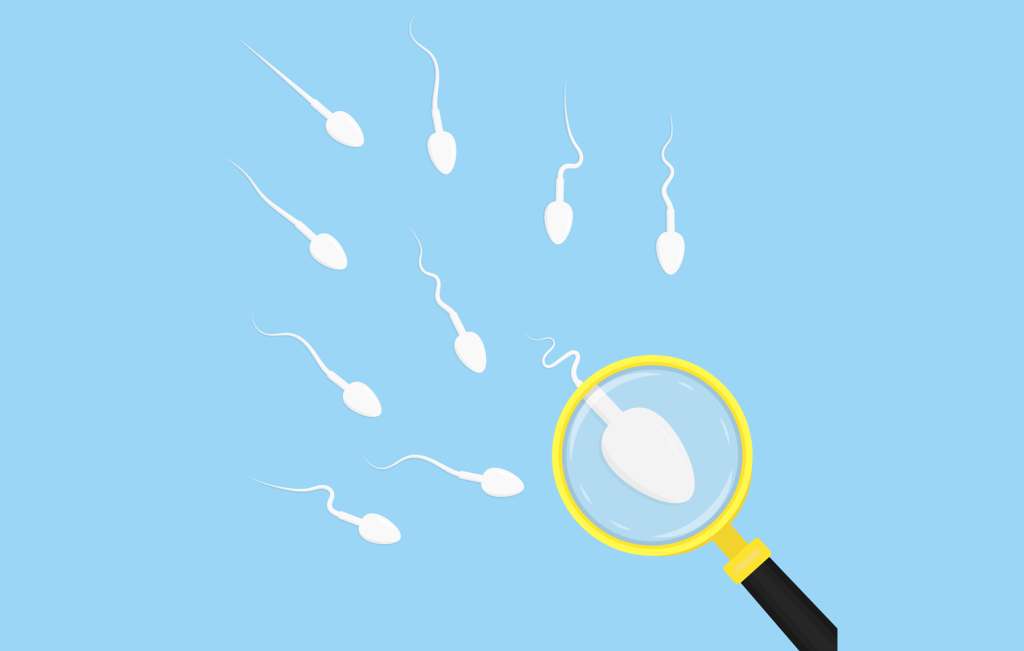
What is
male infertility?
Male infertility is defined clinically as the inability of a couple to achieve pregnancy after 12 months of regular, unprotected intercourse — where the female partner is fertile and the male contribution is identified as the limiting factor. The definition is deliberately simple, because the underlying causes are anything but.
Infertility is always a couple's diagnosis, not an individual's. Even when the male factor is identified, the couple's fertility journey is shared. That's why we welcome both partners at the consultation, particularly the first one — many of the most important decisions about workup, treatment timing, and reproductive options work best when both partners hear them together.
The good news, and the reason this page exists: the male side is the half of infertility most likely to have an identifiable, treatable cause. A semen analysis takes a single morning's effort. A scrotal examination takes ten minutes. A hormonal panel is a simple blood draw. By the end of the first or second visit, we usually know whether the male factor is contributing — and if so, what's likely to help.
Where male infertility
comes from.
Varicocele
Enlarged veins around the testicle raise scrotal temperature and damage sperm production. Affects about 1 in 7 men. Microsurgical repair has the strongest evidence in male infertility. More on varicocele →
Hormonal Imbalance
Low testosterone, high prolactin, thyroid dysfunction, pituitary abnormalities. All can disrupt sperm production. Identified by a simple hormonal blood panel. Often treatable medically.
Lifestyle Factors
Smoking, heavy alcohol, obesity, sedentary work, heat exposure (laptops on lap, hot baths, saunas), anabolic steroid use, recreational drugs. Often combine. Often fully reversible.
Infection & STI Damage
Past or current infections — including silent ones — can scar the sperm-carrying ducts or affect testicular function. Mumps orchitis in childhood is a recognised cause.
Ejaculatory Disorders
Retrograde ejaculation (semen flowing backwards into the bladder), failure of ejaculation, or anatomical blockage in the sperm-carrying ducts. Often treatable.
Genetic Causes
Klinefelter's syndrome (XXY), Y-chromosome microdeletions, cystic fibrosis-related vas deferens absence. Identified by karyotype and genetic tests. Affects approach to assisted reproduction.
Obstructive Causes
Blockage in the epididymis, vas deferens, or ejaculatory ducts — from prior infection, surgery, or congenital absence. Sometimes surgically correctable.
Idiopathic
In about 25–30% of cases, no specific cause is found despite a complete workup. Doesn't mean nothing can help — lifestyle optimisation, antioxidants, and assisted reproduction all remain options.
From first visit to
clear diagnosis.
A complete male infertility workup is built around a small number of high-yield investigations. We don't order everything reflexively — we order what your specific history points to. The standard sequence:
- Detailed history — duration of trying, prior pregnancies (yours or partner's), childhood illnesses (mumps), groin surgery (hernia repair, varicocele, undescended testis), past STIs, medications (including steroids and supplements), lifestyle factors, occupational heat exposure, family history.
- Examination — testicular size and consistency, presence of varicocele, vas deferens palpation, examination for hydrocele or other scrotal abnormalities.
- Semen analysis — the foundational test. Two samples, 2–3 weeks apart, with 2–5 days abstinence before each.
- Hormonal panel — total and free testosterone, FSH, LH, prolactin, TSH, oestradiol. Done on a morning sample.
- Scrotal Doppler ultrasound — assesses testicular volume, looks for varicocele, identifies any masses.
- Selected further tests — karyotype and Y-chromosome microdeletion testing for severely abnormal semen parameters; transrectal ultrasound for suspected ejaculatory duct obstruction; post-ejaculate urine analysis for suspected retrograde ejaculation.
The single most important
test in male infertility.
Done properly — twice, with proper abstinence, at a reliable lab — semen analysis is the foundation everything else builds on.
What we look at:
- Concentration — sperm per millilitre. Lower limit of normal: 15 million/mL.
- Total count — concentration × volume. Lower limit: 39 million per ejaculate.
- Motility — percentage of sperm that move. Lower limit: 40% total motility, 32% progressive motility.
- Morphology — percentage of normally-shaped sperm. Lower limit: 4% (strict criteria).
- Volume, pH, time to liquefaction, white cells, fructose — supporting parameters.
Common patterns and what they suggest:
- Oligospermia — low count. Often varicocele, hormonal, or lifestyle.
- Asthenospermia — low motility. Often varicocele, infection, lifestyle.
- Teratospermia — abnormal morphology. Often lifestyle, oxidative stress.
- OAT (oligoasthenoteratospermia) — all three reduced. Combined factors.
- Azoospermia — no sperm in the ejaculate. Requires distinguishing obstructive (treatable surgically) from non-obstructive (testicular failure) — different treatment paths.
Matching treatment
to cause.
Treatment of male infertility is highly cause-specific. There is no single "infertility treatment" — there is the right intervention for your specific findings.
Surgical treatments:
- Microsurgical varicocelectomy — gold-standard repair for varicocele. Done under spinal or general anaesthesia, day-care or single overnight. Improves semen parameters in 60–70% of patients and restores natural pregnancy in 40–60% of selected couples.
- Vasoepididymostomy or vasovasostomy — for obstructive azoospermia from epididymal blockage or prior vasectomy. Microsurgical reconstruction.
- TURED (transurethral resection of ejaculatory ducts) — for ejaculatory duct obstruction.
- Sperm retrieval (PESA, TESA, micro-TESE) — for non-obstructive azoospermia or for IVF/ICSI when sperm aren't available in ejaculate. Coordinated with reproductive medicine partners.
Medical treatments:
- Hormonal therapy — clomiphene, hCG, letrozole for selected hormonal causes. Restored fertility in many cases of hypogonadotropic hypogonadism.
- Treatment of infection — antibiotics for confirmed bacterial infection of the genital tract.
- Antioxidants — coenzyme Q10, L-carnitine, vitamin E, zinc. Modest evidence in oxidative stress-related infertility.
- Medication review — switching out fertility-impairing medications where alternatives exist (some BP drugs, certain antidepressants, anabolic steroids).
Lifestyle interventions are often the most powerful and most underused — they're covered in their own section below.
The interventions
you can start tomorrow.
Before any surgery, before any IVF, lifestyle optimisation is the cheapest and most often effective intervention in male infertility. None of it is glamorous. All of it helps.
- Weight management — obesity reduces testosterone, impairs sperm production, raises scrotal temperature. Losing 10% body weight can significantly improve semen parameters.
- Stop smoking — completely. Smoking damages sperm DNA, reduces motility, and lowers testosterone.
- Reduce alcohol — heavy alcohol use suppresses testosterone and damages sperm production. Moderate intake is acceptable.
- Avoid heat exposure — no hot tubs, saunas, or laptops on the lap. The scrotum is designed to be cooler than core body temperature — heat impairs sperm production for weeks.
- Exercise regularly but moderately — moderate exercise improves fertility. Excessive endurance training can lower testosterone.
- Stop anabolic steroids immediately — even years of use can be recovered from, but recovery takes 6–24 months after stopping. Many men don't realise their gym supplements include hormonal agents.
- Limit caffeine and energy drinks — modest evidence of impact on sperm quality at high intake.
- Manage stress — chronic stress suppresses testosterone and disrupts sperm production.
- Improve sleep — testosterone is largely produced during sleep. Sleep apnoea, in particular, dramatically suppresses testosterone.
- Review medications — some BP drugs, antidepressants, opioids, and supplements impair fertility. Discuss before changing.
Reproductive medicine —
and our role in it.
For some couples, assisted reproductive technology (ART) is the right path — either because the male factor is severe, the female factor is significant, or time is critical. We don't do IVF in-house, but our role in the journey is significant.
- IUI (intrauterine insemination) — suitable for mild male factor, used when there's some male factor but reasonable counts. Female partner's eggs are not retrieved; sperm is concentrated and placed directly in the uterus during ovulation.
- IVF (in vitro fertilisation) — eggs are retrieved from the female partner, fertilised with sperm in the lab, embryo placed in the uterus. Used for moderate male factor or combined factors.
- ICSI (intracytoplasmic sperm injection) — a single sperm injected directly into each egg. Required for severe male factor — when sperm are too few, too immotile, or surgically retrieved.
- Surgical sperm retrieval + ICSI — for obstructive or non-obstructive azoospermia. We perform the sperm retrieval (PESA, TESA, micro-TESE), and the ART centre handles the ICSI.
What we do: complete the male workup, treat what's treatable on our side (varicocele, hormonal issues, lifestyle), perform surgical sperm retrieval when needed, and refer to reputable reproductive medicine centres in Jaipur and elsewhere for the IVF/ICSI itself.
What we don't do: take commissions for referrals. We have no financial interest in which ART centre you choose. We can recommend reputable options based on outcomes and ethics, not on payments.
Surgical expertise.
Honest advice.
No commissions.
Microsurgical varicocelectomy in-house
The most evidence-based male infertility surgery, performed with microsurgical technique — not the older laparoscopic or radiological approaches that have higher recurrence.
No commission referrals
When IVF is needed, we refer to reputable centres based on outcomes and ethics. We take no commission. Your wallet decides, not ours.
Couples consultation welcome
Many decisions are easier when both partners hear them together. We make time and space for couples consultations — particularly at the first visit.
Confidential by default
Records are private. The diagnosis stays between you, your partner, and us. Family members and employers are never informed without consent.
Pricing for male
infertility care.
| Service | Starting from |
|---|---|
| Couples consultation | ₹ [____] |
| Semen analysis (per sample) | from ₹ [____] |
| Hormonal panel (testosterone, FSH, LH, prolactin, TSH) | from ₹ [____] |
| Scrotal Doppler ultrasound | from ₹ [____] |
| Karyotype + Y-microdeletion (selected cases) | from ₹ [____] |
| Microsurgical varicocelectomy | from ₹ [____] |
| Vasoepididymostomy / vasovasostomy | from ₹ [____] |
| Surgical sperm retrieval (PESA/TESA) | from ₹ [____] |
| Hormonal therapy (per month) | from ₹ [____] |
Coverage varies — we tell you upfront.
Varicocelectomy and other surgical procedures (when medically coded appropriately) are generally covered by major insurers. Diagnostic workup and IVF/ICSI are often not covered by Indian policies — we discuss costs upfront so there are no surprises. Many couples self-pay for the workup and use insurance only for surgery.
Male infertility —
your questions.
The formal definition of infertility is 12 months of trying without success. However, if there are known risk factors (age over 35 in the female partner, prior testicular issues, prior groin surgery, irregular menstrual cycles, history of STIs), don't wait. Come in earlier. The male side of the workup is quick and inexpensive — no reason to delay it.
For the first consultation — yes, ideally. Many of the most important decisions involve both partners, and infertility is a shared journey. For follow-ups about specific male issues, the male partner can come alone. We accommodate either.
"Normal" parameters per WHO criteria are: concentration ≥15 million/mL, total motility ≥40%, normal morphology ≥4%. Just being above these cut-offs doesn't guarantee fertility, and being below doesn't guarantee infertility — the parameters are statistical reference points. Interpretation considers all parameters together along with your partner's fertility status.
No — but the evidence is strong. About 60–70% of patients show improved semen parameters after microsurgical varicocelectomy. About 40–60% of couples achieve natural pregnancy within 12–18 months when other female factors are favourable. Results depend on initial parameters, varicocele grade, and other factors.
Not necessarily. Many couples conceive naturally after addressing treatable male factors (varicocele, hormonal, lifestyle). IVF or ICSI is needed when male factors are severe, when other factors require it, or when time is critical (older female partner). The right answer depends on your specific situation — and isn't always IVF.
Generally no — not if you want children. Testosterone replacement therapy (TRT) suppresses sperm production and can cause azoospermia. For low testosterone in men wanting fertility, we use alternatives: clomiphene, hCG, or other agents that raise testosterone without suppressing sperm production.
Chronic significant stress can suppress testosterone and affect sperm production. The relationship is modest but real. Stress management — sleep, exercise, sometimes counselling — is a legitimate part of the treatment plan, not a dismissal of the medical issue.
Sperm take about 72 days to mature. Significant lifestyle changes — weight loss, smoking cessation, reduced alcohol, addressing heat exposure — typically show improvement on semen analysis at 3 months. Some improvements are visible sooner. We typically reassess at 3 months.
Yes — absolutely. The diagnosis is between you, your partner, and us. Family members, employers, and insurance companies are not informed of specific diagnoses without your consent.