
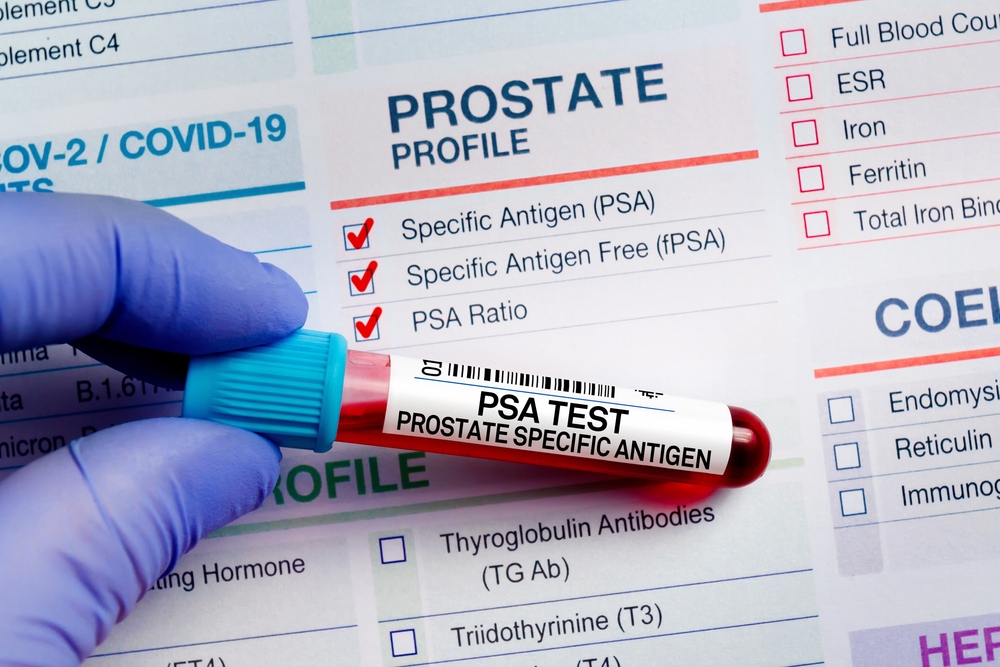
What is
PSA?
PSA — Prostate-Specific Antigen — is a protein produced by the prostate gland. A small amount leaks into the bloodstream where it can be measured. The PSA test is one of the most widely-used screening tools in men's health, but it is also one of the most misunderstood.
The simple version of the story is that high PSA = bad. The accurate version is that PSA is sensitive but not specific — it tells you something is happening in the prostate, but not what. Cancer is one possibility. So is BPH, so is prostatitis, so is recent ejaculation, so is a digital rectal examination done minutes before the blood was drawn. The PSA value itself is information, not a diagnosis.
The reference value most labs use is below 4.0 ng/mL — but this is a generalisation. PSA naturally rises with age. PSA varies with prostate size. The trend over time often matters more than a single value. PSA density (PSA divided by prostate volume), free vs total PSA ratio, and PSA velocity (rate of change) all refine what a number means.
Most elevations are
not cancer.
Benign Prostatic Hyperplasia (BPH)
An enlarged prostate produces more PSA simply because there is more prostate tissue. The single most common reason for a "high" PSA in men over 50.
Prostatitis
Inflammation or infection of the prostate raises PSA significantly — sometimes into the 20–50 range. Once treated, PSA falls. Acute prostatitis especially can produce very high readings.
Prostate Cancer
The reason PSA is tested in the first place. But it accounts for only a minority of elevated PSAs — roughly a quarter of biopsies done for elevated PSA come back showing cancer.
Recent Activity
Ejaculation within 48 hours, vigorous cycling, a digital rectal exam done same day, recent catheterisation, or recent prostate biopsy can all elevate PSA. Always avoid these before testing.
Ageing
PSA naturally rises with age. A PSA of 3.5 may be borderline at 50 but completely normal at 75. Age-adjusted reference ranges exist for this reason.
UTI or Manipulation
A urinary tract infection can dramatically and temporarily raise PSA. So can recent catheterisation, cystoscopy, or prostate massage. A retest 4–6 weeks later often shows normalisation.
Not just the number —
the context.
A single PSA value, in isolation, is rarely enough to make a clinical decision. Modern urology looks at:
- The absolute value — under 4 is generally low risk, 4–10 is the "grey zone" where most workup happens, over 10 has higher cancer risk, over 20 needs urgent evaluation
- Your age — age-adjusted reference ranges are higher in older men
- PSA density — PSA divided by prostate volume from ultrasound. PSA density above 0.15 suggests cancer is more likely than BPH
- Free PSA percentage — a higher free-to-total ratio (above 25%) leans toward BPH; lower (below 10–15%) leans toward cancer
- PSA velocity — how fast it is rising. A rise of more than 0.75 ng/mL per year is more concerning than a stable value
- Digital rectal examination findings — a hard, nodular prostate carries higher risk regardless of the PSA value
- Family history — prostate cancer in a first-degree relative raises baseline risk
- Symptoms — bone pain, weight loss, neurological symptoms suggest more urgent evaluation
This is why a structured consultation matters. The same PSA value can mean very different things — and the decision to biopsy or not should never be made on a single number alone.
A structured
evaluation, not a panic.
At Kalra Endo-Uro Care, an elevated PSA gets a stepwise workup:
- Step 1 — Repeat PSA in 4–6 weeks, off any triggers (no ejaculation 48 hours prior, no cycling, no recent rectal exam). About 25% of "elevated" PSAs normalise on repeat.
- Step 2 — Urine analysis & prostate exam to rule out infection and assess prostate by feel.
- Step 3 — Treat any infection if present. A course of antibiotics for prostatitis often brings PSA down dramatically.
- Step 4 — Free PSA + PSA density to refine cancer probability.
- Step 5 — Multi-parametric MRI (mpMRI) of the prostate — modern best practice before any biopsy in most patients. Identifies suspicious areas and may avoid biopsy altogether in low-risk imaging.
- Step 6 — Targeted biopsy only if MRI shows suspicious areas, or if other indicators warrant it.
- Step 7 — Active surveillance, treatment, or watchful waiting based on biopsy result and the type of cancer found (if any).
Why mpMRI
is the new standard.
Until a few years ago, the standard pathway was: elevated PSA → systematic 12-core needle biopsy of the prostate (often blindly). That pathway found many cancers but also exposed thousands of men to unnecessary biopsies and over-diagnosed insignificant cancers that did not need treatment.
The modern pathway is: elevated PSA → multi-parametric MRI of the prostate → biopsy only if MRI shows suspicious lesions, and then targeted to those lesions specifically. This approach is now endorsed by every major urology guideline globally.
What mpMRI shows: areas of restricted diffusion, abnormal vascularity, and structural lesions — reported on the PI-RADS scale from 1 (very low suspicion) to 5 (high suspicion). PI-RADS 1–2 lesions usually do not need biopsy. PI-RADS 3 is intermediate — biopsy depends on other factors. PI-RADS 4–5 needs biopsy.
If biopsy is indicated —
how it works.
A prostate biopsy is the only way to definitively diagnose or rule out prostate cancer. Modern biopsy is done under local or short general anaesthesia, takes 15–20 minutes, and uses one of two approaches:
- Transrectal ultrasound-guided biopsy (TRUS biopsy) — needles are passed through the rectal wall under ultrasound guidance. Standard approach historically. Higher infection risk; requires antibiotic prophylaxis.
- Transperineal biopsy — needles enter through the skin between the scrotum and anus. Lower infection risk. Increasingly the preferred approach in modern centres.
- MRI-fusion targeted biopsy — MRI findings are overlaid on real-time ultrasound so the biopsy needles can specifically target suspicious areas seen on MRI. The most accurate approach.
Recovery is straightforward — most men return to normal activities within 24–48 hours. Some blood in urine, semen, or stool is normal for 1–2 weeks afterwards. Histology results typically take 7–10 days.
If biopsy shows no cancer — good news, but PSA continues to be monitored. If biopsy shows cancer, the next conversation is about Gleason score, staging, and treatment options — covered in detail on the prostate cancer page.
Structured.
Considered.
Not over-aggressive.
Modern MRI-first pathway
We do not biopsy on a single PSA value. Multi-parametric MRI comes first where appropriate — fewer unnecessary biopsies, more accurate diagnoses.
Repeat-and-recheck approach
About a quarter of "elevated" PSAs normalise on a properly-conducted repeat. We do that first — saving men from unnecessary anxiety and procedures.
Honest about uncertainty
If biopsy is genuinely borderline, we say so. If active surveillance is the right answer (rather than radical surgery), we say so. No pressure toward intervention.
Second opinions welcome
If you have been told you need a biopsy or a treatment plan, and you want a structured second opinion — bring the reports. We will assess honestly.
Pricing for PSA
workup & investigation.
| Service | Starting from |
|---|---|
| Consultation + PSA review | ₹ [____] |
| Repeat PSA test | ₹ [____] |
| Free PSA + total PSA panel | from ₹ [____] |
| Prostate ultrasound (TRUS) | from ₹ [____] |
| Multi-parametric prostate MRI | from ₹ [____] |
| TRUS-guided biopsy | from ₹ [____] |
| MRI-fusion targeted biopsy | from ₹ [____] |
| Follow-up review of biopsy result | ₹ [____] |
Diagnostic workup covered by most insurers.
MRI and biopsy are generally covered when clinically indicated. Cancer-related treatment (if needed downstream) is covered by all major insurers. We handle pre-authorisation.
Elevated PSA —
your questions.
Not necessarily. About 75% of elevated PSAs in screening turn out to be non-cancerous causes — BPH, prostatitis, recent activity, infection. The PSA tells us to investigate, not that you have cancer. A proper workup is the next step, not panic.
5.5 is in the "grey zone" where workup is warranted but not in the high-risk range. The next steps would be repeat PSA, free PSA percentage, prostate examination, and likely an MRI before any biopsy. Many men with PSA in this range turn out to have BPH or prostatitis, not cancer.
Yes — avoid ejaculation for 48 hours before, avoid cycling/spinning classes for 48 hours, do not have a digital rectal exam in the days before the blood draw, and inform the lab if you have had a recent catheterisation, cystoscopy, or UTI. Any of these can falsely elevate PSA.
For most men with elevated PSA, yes — multi-parametric MRI is now international best practice. It identifies which men can safely avoid biopsy, and for those who do need one, makes the biopsy more accurate. Exceptions exist (very high PSA, abnormal prostate exam, or known prostate cancer history) where biopsy proceeds directly.
Done under local or short general anaesthesia, so the procedure itself is not painful. You may feel pressure and brief discomfort. Most men report mild soreness for a day or two afterwards. Blood in urine, semen, or stool for 1–2 weeks is normal.
Typically 7–10 days. We schedule a follow-up consultation to discuss the result in person — never a phone call delivery of a serious diagnosis.
This happens. We continue monitoring with regular PSA, repeat MRI in 6–12 months, and re-biopsy only if findings change. Most often the elevated PSA is from chronic prostatitis or large BPH — not missed cancer.
PSA workup, MRI, and biopsy are covered by most Indian insurers when clinically indicated. Routine screening PSA may or may not be covered depending on your policy — we will tell you upfront.
